

ELECTRICAL ENGINEERING
We are an electrical engineering certified company, specializing in technology projects for the residential and commercial sector. We have the capability to manage the entire process from the planning stage to its execution and make a turnkey offer.
PROJECT
Projects lighting studies, integration of entertainment systems, security and all home automation systems.

EXECUTION
Execution with our own technicians, all electrical work such as wiring, piping including the programming and systems integration.

PHOTOVOLTAIC ENERGY
Dimensioning and installation of photovoltaic energy production and storage systems.
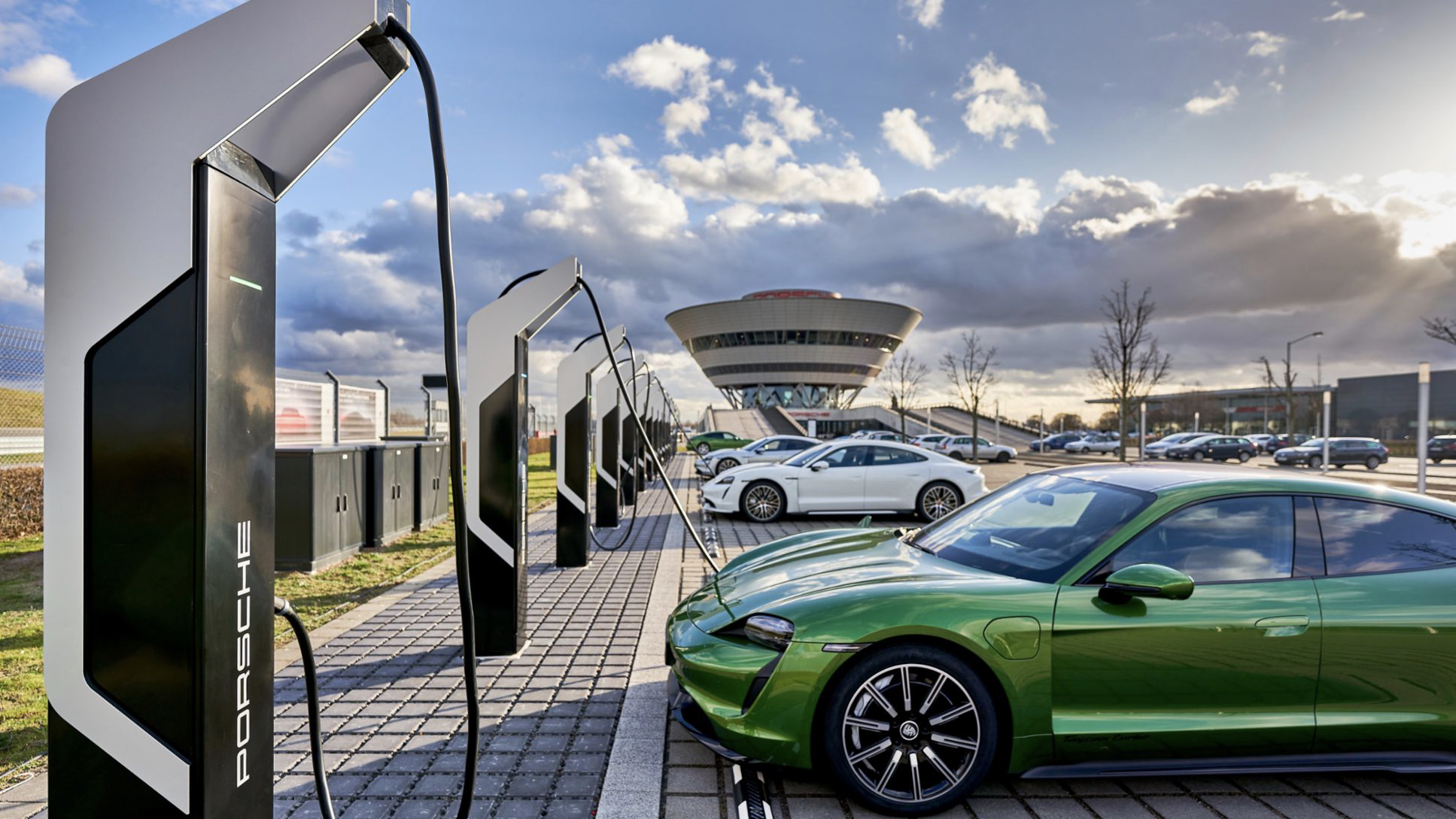
EV CHARGING
Installation and operation of charging systems for electric vehicles.
Electrical engineering, energy and mobility as one design
Twenty years ago an electrical installation had one job: deliver power safely to sockets and lights. A house built today does considerably more. It generates its own electricity, stores some of it, charges a car that draws more than the rest of the house combined, and has to decide continuously how to spend a supply that is finite.
Those are not four separate installations. Designed separately they conflict — the car trips the main breaker, the solar array exports power at midday that the house pays to buy back at night, and nobody can see where consumption is going. Designed together they compound.
The electrical design comes first
Everything downstream depends on the distribution board and the cable that reaches it. We design the installation for the house that will exist in ten years, not the one being handed over.
In practice that means calculating the contracted power against realistic simultaneous demand rather than a rule of thumb; sizing the board with genuinely spare ways; deciding early whether the supply is single-phase or three-phase, because retrofitting three-phase is expensive and disruptive; running conduit to where a charger, a battery or an inverter will plausibly go, even when none is being installed now; and separating circuits so that a fault in one part of the house does not darken the rest.
Protection is not a place to economise. Residual current devices sized and grouped so that a single fault does not disconnect the whole house, surge protection at the board — the Algarve gets serious summer storms — and earthing verified by measurement rather than assumed.
We integrate lighting and blinds with KNX and Control4, which is where an electrical installation stops being wiring and starts being infrastructure. It also means the same system that switches a light can read a meter and control a charger.
Energy management: measure before you optimise
Almost every discussion about saving energy starts with what to install. It should start with what is actually being consumed, because intuition is consistently wrong. In most houses, a small number of loads dominate — heat pumps, pool equipment, water heating, air conditioning, and increasingly the car — and they are rarely the ones people suspect.
Monitoring means current transformers on the incoming supply and on individual circuits, sampled continuously and recorded. Once a house is measured, three things become possible that are guesswork without it.
Load management. A contracted supply is a hard ceiling. Exceed it and the main breaker trips. Rather than paying permanently for a larger supply to cover a few minutes a day, the system sheds or defers flexible loads when demand approaches the limit — pausing the pool pump or throttling the car charger while the oven and the induction hob are both running, then restoring them. The household notices nothing except that the power never fails.
Tariff optimisation. Where a time-of-use tariff applies, deferrable loads move to the cheap hours automatically. Water heating, pool filtration, dishwashers and car charging are all indifferent to when they run, provided they are finished by morning.
Self-consumption. This is where solar and energy management stop being separate topics, and it is covered below.
What we would not claim is that monitoring by itself saves energy. It does not. What it does is make the invisible visible, and every decision after that is better informed.
Photovoltaic: sized for the house, not for the roof
The Algarve has among the best solar resource in Europe — roughly 2,800 to 3,000 hours of sun a year. That makes photovoltaic generation straightforward to justify and easy to specify badly.
The mistake we see most often is sizing an array by available roof area. An array is properly sized against the consumption profile, because the economics of self-consumption and export are completely different. Electricity you generate and use yourself displaces what you would have bought. Electricity you export earns considerably less. A system that produces a large midday surplus which the house cannot use is a system that cost more than it needed to.
Orientation and tilt follow from that. At the latitude of the Algarve, around 37°N, a tilt near 30 to 35° facing south maximises annual yield. But a west-facing array produces less in total and more in the late afternoon, which is when many households actually consume — and a split east–west array flattens the curve, producing less at noon and more at both ends of the day. Which is correct depends entirely on when the house uses power.
Practical points that decide whether an installation performs:
- Shading is not proportional — a single shaded panel can drag down a whole string. Where shading is unavoidable, module-level electronics or multiple MPPT inputs recover most of the loss.
- Inverter sizing is normally slightly below peak array output. A modest DC-to-AC ratio above 1 costs a few hours of clipping per year and improves performance the rest of the time.
- Heat. Panels lose efficiency as they get hot, and Algarve summers are hot. Mounting that allows airflow behind the modules matters more here than in northern Europe.
- Batteries shift surplus from midday to evening. They are what turns a good self-consumption ratio into a very good one — and they are also the most expensive component per unit of benefit, so they should follow from measured consumption rather than lead the design.
- Registration. Self-consumption installations in Portugal must be registered, and the requirements depend on installed capacity. We handle the process.
Electric vehicle charging: the largest single load in the house
A domestic charger is not an appliance. A 7.4 kW single-phase charger draws about 32 A continuously for hours — more than the rest of a typical house combined, and for far longer than an oven or a hob. On a three-phase supply, 11 kW and 22 kW are both common. Installing one without reviewing the supply is the most reliable way to start tripping the main breaker.
Three decisions matter.
Power and phases. More is not automatically better. A car that sits on the drive for twelve hours does not need 22 kW; 7.4 kW adds roughly 40 km of range per hour, which covers almost any daily pattern overnight. Higher power matters for vehicles that turn around quickly, and for properties with more than one car.
Dynamic load balancing. This is the feature that decides whether a charger coexists with the house. The charger measures total consumption at the supply and continuously adjusts its own draw to fit within whatever headroom remains. Charging slows while dinner is cooking and speeds up again afterwards. Without it, the only options are an oversized supply or a household that learns not to charge at the wrong time.
Solar-surplus charging. With generation, monitoring and the charger on the same system, the car can absorb surplus that would otherwise be exported at low value — charging only from what the array produces beyond what the house is using, or topping up from the grid when a departure time requires it. This is the single most valuable interaction between the three systems on this page, and it only exists if they were designed together.
An honest caveat: solar-surplus charging is limited by the minimum current a charger can deliver — typically 6 A, about 1.4 kW single-phase. Below that threshold a car cannot charge at all, so on cloudy days or with a small array the surplus may never be usable without drawing some grid power to make up the difference. It is a real feature with real limits, and worth understanding before it is specified.
We work with chargers that support OCPP, the open protocol for charge-point management. It matters because it keeps the installation independent of any single manufacturer’s cloud service, and because it is what allows access control, per-user metering and scheduling on properties with more than one user — developments, hotels, tourist accommodation.
Where the three meet
Consider a house with a 10 kW array, a battery, a heat pump, a pool and an electric car — increasingly the standard specification for new construction in the Algarve.
Designed as separate installations: the array exports at midday, the battery charges from the grid at the wrong time, the car charges whenever it is plugged in, the pool runs on a timer set two summers ago, and the main breaker trips when everything coincides.
Designed as one system: the array serves the house first, then the car, then the battery, then export. Pool filtration moves to the solar peak. Water heating follows surplus. The car takes what is left, unless it is needed by a set time, in which case it draws what it must at the cheapest available hours. And when everything runs at once, the charger yields rather than the breaker.
None of that requires exotic equipment. It requires the systems to be able to see each other, which is a design decision taken at the beginning and difficult to add later.
Working with iHome
We are an official Control4 dealer and a certified KNX partner, and we have been designing and installing electrical systems in Algarve properties — private homes, developments and hospitality — since 2006.
Our KNX work has been judged nationally: iHome won the Prémio Projeto KNX at the Prémios KNX Portugal 2020, for Dunas Douradas Beach Villas. The KNX awards are run by the standard’s Portuguese association rather than by a manufacturer, and the Projeto category assesses the installation itself. More on our awards.
Because we do the electrical design, the automation and the energy systems, they are specified against each other rather than around each other. That is most of the difference.
Call (+351) 289 090 900 or email geral@ihome.pt to discuss a project.